Beslenme
Eating well with PCOS: there is no single "right diet"
Guidelines found no diet that beats the others for PCOS. So how can you build your plate, and what about popular diets? We simplified what the evidence says.
Published · 6 min read
Search for a "PCOS diet" and you will find gluten-free, dairy-free, keto, intermittent fasting and plenty more. With so much conflicting advice, it is completely natural to feel confused. In this article we simplify what the evidence really says and what you can do day to day.
In short: Under the 2023 International PCOS Guideline, no type of diet is better than the others; what matters is a balanced pattern that suits you and that you can keep up. Fibre, protein at every meal and regular meals are a good place to start. Eating well is about supporting your body, not punishing it, and that is true at every weight.
How PCOS and food are linked
PCOS is not only about the ovaries; it also affects metabolism. That is why the 2023 International PCOS Guideline recommends checking blood sugar status at regular intervals, whatever your weight [1].
The key idea here is insulin resistance. Insulin is the hormone that moves sugar from the blood into your cells. With insulin resistance, cells respond less to insulin, so the body makes more of it to compensate. High insulin can push the ovaries to make more androgens ("male hormones"). This can worsen symptoms such as acne, hair growth and irregular cycles.
Women with PCOS have a several times higher risk (roughly 2–4 fold) of impaired glucose tolerance, meaning blood sugar comes down more slowly than usual after eating, and of type 2 diabetes. This difference is not explained by weight alone [2]. Because PCOS occurs at every weight, food matters at every weight too.
What the evidence says
Under the guideline, no type of diet has been shown to be better than the others [1]. Mediterranean-style, lower-carb or something else: the benefit of each depends largely on how well you can keep it up.
A Cochrane review compared lifestyle programmes that combined food and movement with minimal care. People in the programmes saw improvements in weight, insulin resistance and androgen-related outcomes [3]. The quality of the evidence is low, which means future studies could change these results.
In women with extra weight, even a small loss of 5–10% of body weight can bring benefits [1]. But weight is not the only measure of health. The benefits of eating well can show up in blood sugar, energy and mood even when the scale does not move.
About popular diets
| Approach | Evidence for PCOS | Worth knowing |
|---|---|---|
| Gluten-free | Not shown to be better than others | May not be needed without coeliac disease |
| Dairy-free | Not shown to be better than others | Calcium needs to come from other sources |
| Keto | Not shown to be better than others | Very restrictive and hard to keep up |
| Intermittent fasting | Not shown to be better than others | Long fasts can trigger overeating in some people |
If one of these approaches works for you, that is valuable to know. Simply knowing they are not "required" for PCOS can free you from unnecessary rules.
How to build your plate
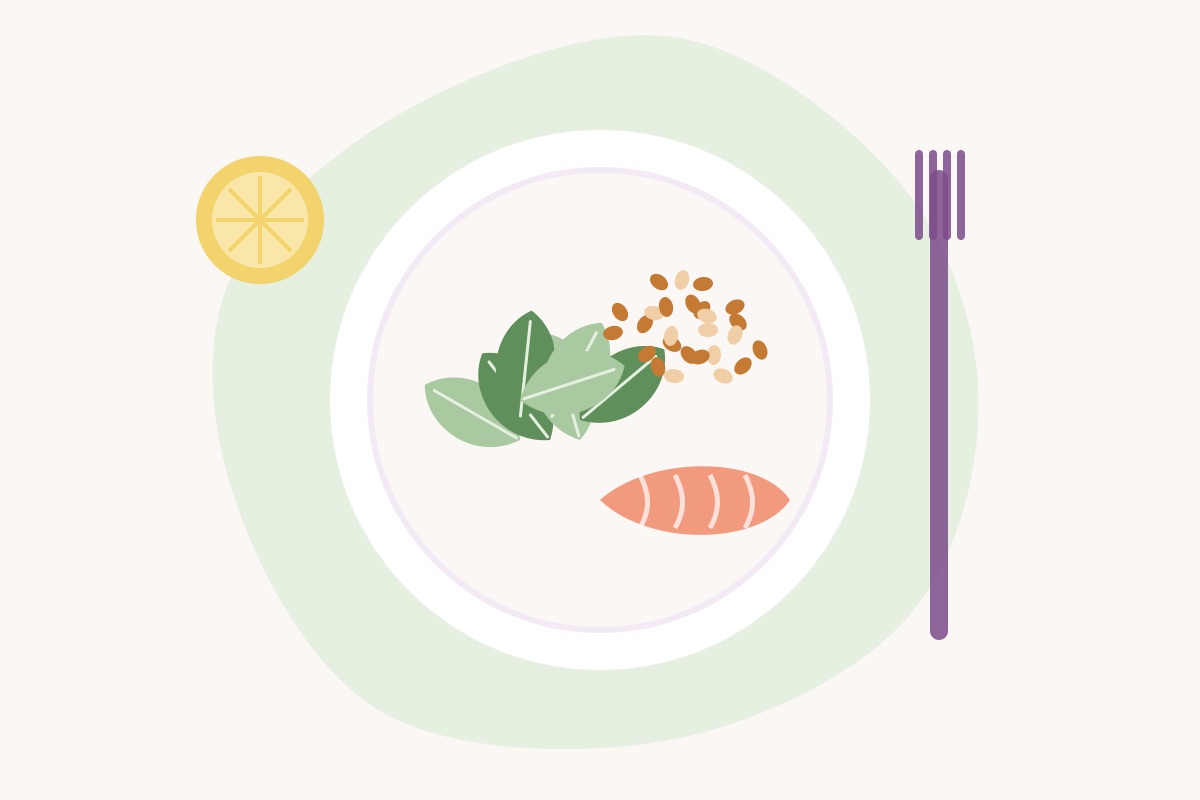
A practical approach is to fill half your plate with vegetables, a quarter with protein and a quarter with whole grains or legumes. This is not a rule, just an easy guide to get started.
Fibre
Vegetables, fruit, legumes and whole grains are rich in fibre. Fibre slows digestion and helps blood sugar rise more steadily. Lentils, chickpeas, bulgur and oats fit easily into everyday cooking. Adding a lot of fibre at once can cause bloating, so increasing it gradually and drinking enough water makes it easier.
Protein
A source of protein at every meal helps you stay full for longer. Eggs, yoghurt, cheese, fish, chicken and legumes are all good choices. For example, eggs or yoghurt at breakfast, a legume dish at lunch and fish or chicken in the evening is an easy way to start.
Fats
Olive oil, walnuts, hazelnuts, avocado and oily fish are healthy sources of fat. There is no need to avoid fat completely; it adds flavour and makes meals more satisfying.
Carbohydrates
Rather than cutting carbs out, you can focus on their quality. Small swaps work: wholegrain bread instead of white, whole fruit instead of juice. Sugary drinks are among the fastest ways to raise blood sugar, so cutting back on them is a good first step.
Weight stigma and your relationship with food
The guideline stresses that women with PCOS often face weight stigma in healthcare and that it causes harm. It recommends that health professionals ask permission before weighing you [1]. If you do not want to talk about your weight, you have every right to say so.
Disordered eating and eating disorders may also be more common with PCOS, and the guideline recommends keeping this in mind at any weight [1]. Very restrictive diets can strain your relationship with food.
Not eating enough has a cost too. When the body gets too little energy for a long time, the brain can suppress ovulation and periods can stop [4]. So "the less, the better" does not work with PCOS either.
What you can do
- Start small: pick one change this week, such as adding a source of protein to breakfast.
- Keep meals regular: avoiding long gaps can help break the cycle of getting very hungry and overeating in the evening.
- Swap sugary drinks: try water, sparkling water or unsweetened tea instead of fizzy drinks or packaged juice.
- Add more legumes: plan a lentil, chickpea or bean dish a few times a week.
- Pair it with movement: food and movement work better together [3]. Start with an activity you enjoy.
- Get professional support: a dietitian can help you build a plan that fits your life, culture and budget.
Frequently asked questions
Is sugar completely off-limits?
No. PCOS does not call for a list of banned foods. Cutting back on sugary drinks and highly processed snacks can help, but having dessert now and then is not a "failure".
Should I take supplements such as inositol?
The guideline says inositol could be considered, but its benefit is limited and uncertain [1]. Supplements do not replace balanced eating. Talk to your doctor before starting any supplement.
My weight is normal; does food still matter?
Yes. PCOS occurs at every weight, and the higher risk of blood sugar problems is present regardless of weight [2]. For you, the goal may not be weight loss at all but supporting your body by eating enough and eating well.
When should I see a dietitian?
If you are confused about what to eat, if your relationship with food feels hard, or if your blood sugar results came back high, a dietitian can be a great support. A personal plan will help you far more than general advice.
This article is for information only; see a dietitian for a personal eating plan.
Sources
- Teede HJ et al. 2023 International Evidence-based Guideline for PCOS. Fertil Steril. 2023; 120(4): 767-793. PubMed
- Kakoly NS et al. Ethnicity, obesity and the prevalence of impaired glucose tolerance and type 2 diabetes in PCOS: a systematic review and meta-regression. Hum Reprod Update. 2018; 24(4): 455-467. PubMed
- Lim SS et al. Lifestyle changes in women with polycystic ovary syndrome. Cochrane Database Syst Rev. 2019; 3: CD007506. Cochrane
- Gordon CM et al. Functional Hypothalamic Amenorrhea: An Endocrine Society Clinical Practice Guideline. J Clin Endocrinol Metab. 2017; 102(5): 1413-1439. PubMed